Why Do 350,000+ Europeans Choose Turkey for Dental Treatment Each Year?
Turkey has become the world's most popular destination for dental tourism — a distinction earned through a combination of factors that no other country currently matches. The headline reason is cost: dental treatment in Turkey costs 60–80% less than equivalent treatment in the UK, Germany, or Scandinavia. But the reasons go deeper than price alone.
Turkish dentists train for five years in regulated dental schools and are subject to ongoing professional requirements. The major private dental hospitals in Antalya invest heavily in modern equipment — 3D CBCT scanners, CAD/CAM milling systems, digital smile design software, and the full range of implant systems and prosthetic materials used by European clinics. Many Antalya dentists have completed post-graduate training in European or American institutions and speak fluent English.
Antalya in particular has developed a specialised ecosystem for dental tourism. The city receives direct flights from virtually every major UK airport (typically 3.5–4 hours flight time), has excellent hotel infrastructure ranging from budget to five-star, and has developed a service infrastructure specifically designed to accommodate international patients — from airport pick-up to post-treatment leisure activities. Many patients describe the combination of dental treatment and a week in a beautiful Mediterranean city as one of the most positive and practical decisions they've made for their health.
The British Dental Association acknowledges that dental treatment abroad can be appropriate when patients do thorough research and choose reputable clinics, and the General Dental Council offers guidance to help patients ask the right questions before proceeding.
Is Dental Treatment in Turkey Safe?
The honest answer is: yes, at reputable clinics, dental treatment in Turkey is safe and the outcomes are broadly comparable to treatment in Western European countries. However, quality varies significantly between clinics, and choosing poorly carries real risks. This is precisely why thorough research — and resources like this website — matter.
The Turkish dental sector is regulated by the Turkish Dental Association (Türk Diş Hekimleri Birliği) and the Turkish Ministry of Health. All practising dentists must be registered, and private dental clinics are subject to inspection and licensing requirements. The materials used at reputable clinics — including implants from Swiss and German manufacturers, E-Max and zirconia prosthetics, and sterilisation protocols — are identical to those used in Europe.
The key safety differentiators when choosing a Turkish clinic are: documented sterilisation and infection control protocols, implant brands from established manufacturers with international warranty coverage, treating clinicians with verifiable qualifications, transparent pricing with no hidden costs, and a track record of successful treatment for international patients evidenced by real, verifiable reviews on Google and Facebook.
Clinics that avoid specifying implant brands, offer dramatically below-market prices, are reluctant to provide detailed treatment plans in advance, or whose reviews are limited or suspect should be approached with caution. The section on red flags below covers this in more detail.
Treatment Costs: Turkey vs UK
The cost differential between Turkey and the UK for dental treatment is significant and consistent across treatment types. Here is a realistic comparison based on 2024–2025 market prices at reputable Antalya clinics:
| Treatment | UK | Turkey | Saving |
|---|---|---|---|
| Single implant + crown | £2,500–£3,500 | £400–£700 | ~75% |
| Porcelain veneer | £500–£1,200 | £100–£250 | ~75% |
| All-on-4 (per arch) | £12,000–£18,000 | £3,500–£6,000 | ~70% |
| Zirconia crown | £700–£1,500 | £150–£350 | ~75% |
| Smile makeover (10 veneers) | £5,000–£12,000 | £1,200–£3,500 | ~75% |
| Teeth whitening (in-chair) | £350–£700 | £80–£150 | ~78% |
| Root canal + crown | £800–£1,400 | £200–£400 | ~72% |
Remember to add the cost of flights (typically £100–£300 return from UK airports to Antalya) and accommodation (£35–£120/night depending on comfort level) to get the true total cost. Even including these, the total for most treatment plans is dramatically lower than equivalent UK private dental fees.
How to Choose a Dental Clinic in Turkey
This is the most important decision in the dental tourism process. Here are the criteria we use when evaluating and recommending clinics:
1. Verifiable Patient Reviews
Look for genuine, detailed reviews on Google Maps and Facebook — not just the overall star rating, but the actual text of individual reviews. Recent reviews from international patients (UK, Germany, etc.) that describe specific aspects of the experience are particularly valuable. Be sceptical of clinics where all reviews are very short ("Great clinic! 5 stars") or appear in a sudden cluster. The UK Competition & Markets Authority offers guidance on identifying authentic reviews.
2. Transparency on Implant Brands
For implant treatment specifically, always ask the clinic to confirm the exact implant system they use (brand, type, and country of manufacture) before committing. Established systems from recognised manufacturers like Straumann (Switzerland), Nobel Biocare (Switzerland), Dentsply Sirona (USA/Germany), or MIS (Israel) carry global warranty programmes. Generic or no-name implants are available at lower prices but lack this safety net.
3. Qualifications and Credentials
A reputable clinic should be able to provide the qualifications and registration details of the dentists who will be treating you. Turkish dentists are registered with the Turkish Dental Association, and many have additional international qualifications in implantology, prosthodontics, or cosmetic dentistry from European institutions.
4. Written Treatment Plan and Itemised Quote
Before travelling, you should receive a written treatment plan that specifies exactly what work will be done, what materials will be used, and what the cost is for each element. This protects you from unexpected additional charges once you're in Turkey and serves as documentation if any disputes arise. Be very cautious of any clinic that is reluctant to provide this.
5. Guarantee and Aftercare Policy
Understand what warranty or guarantee applies to your treatment, and what the procedure is if you experience problems after returning home. Reputable clinics will communicate clearly about this and will have procedures for handling international patient aftercare — typically via email or video consultation, and remedial treatment at no charge for issues covered by the guarantee.
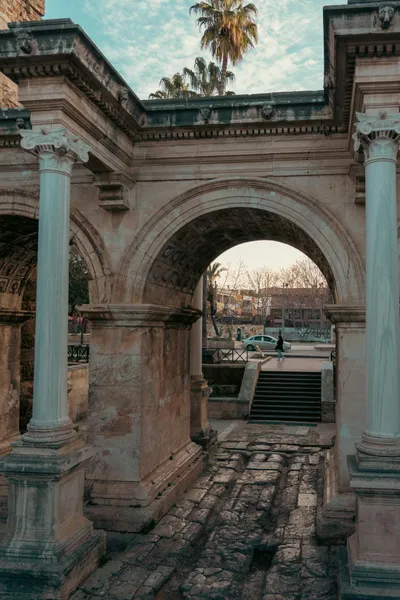
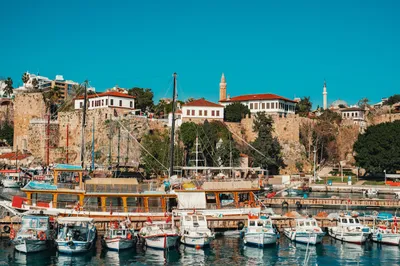
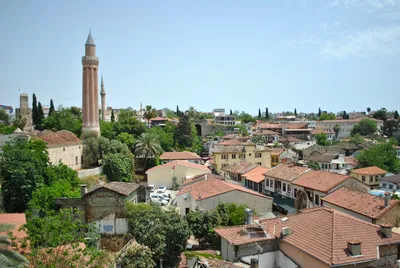
Antalya: Dental Tourism and Mediterranean Heritage
Planning Your Dental Trip to Antalya
Antalya is exceptionally well-connected from the UK, with direct flights from London Gatwick, London Stansted, Manchester, Birmingham, Bristol, Edinburgh, and other major airports. Flight times are typically 3.5–4 hours, and flights are available year-round (though Antalya is especially beautiful in spring and autumn when temperatures are moderate and crowds are lower).
For most dental treatments, a stay of 5–7 days is required. This allows time for an initial consultation, treatment, and any necessary adjustments before the final fitting. For implants, two visits are typically required: the placement visit (4–6 days) and the crown fitting visit (3–5 days), usually 3–6 months apart. All-on-4 procedures may require 6–7 days for the first visit.
Accommodation in Antalya ranges from budget guesthouses to five-star beachside resorts. The clinic's coordination team can typically recommend accommodation near the clinic and may have preferential rates with local hotels. Many patients choose to spend their non-treatment days exploring Antalya's beautiful old city (Kaleiçi), the ancient ruins of Perge and Aspendos, the beaches of Konyaaltı and Lara, and the excellent local food and hospitality.
What to Expect During Treatment
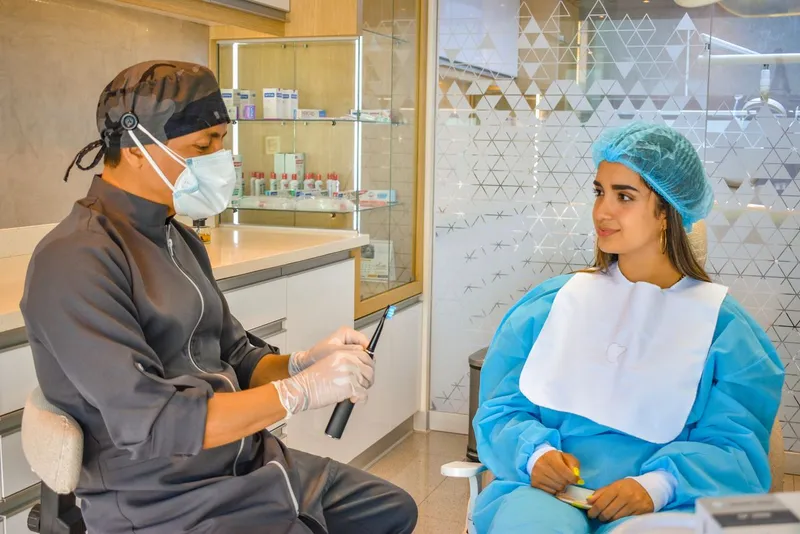
Most international patients are pleasantly surprised by the standard of dental clinics in Antalya. Modern private dental clinics are clean, well-equipped, and designed with patient comfort in mind — often exceeding the aesthetic quality of UK NHS surgeries. Consultation rooms are spacious, equipment is modern, and the overall atmosphere is professional and welcoming.
Treatment is carried out under local anaesthetic for most procedures, with IV sedation available for patients who experience dental anxiety or for more complex surgical procedures like All-on-4. Pain management post-procedure is well-managed, and patients are typically provided with appropriate analgesics and antibiotics where relevant. Most patients report that the discomfort following dental treatment in Turkey is no greater than they would experience in a UK clinic — and often less, because procedures are typically more carefully planned.
Communication is a common concern for patients, but at English-specialist clinics like Taki Dent, this is not an issue. The treating dentists and all coordination staff communicate effectively in English, and many clinics also have German, French, or Dutch-speaking staff for patients from those countries.
Aftercare and Follow-Up
One of the most common questions about dental tourism concerns what happens when you return home. The answer, for reputable clinics, is straightforward: you remain in contact with the clinic via email or video consultation, your local dentist monitors healing and takes X-rays as required, and any issues that arise are handled through a combination of remote consultation and, where necessary, a return visit to the clinic.
For implant patients, it is particularly important to register the implant warranty with the manufacturer immediately after treatment — a simple online process that provides you with international warranty coverage through the manufacturer's global network. Your clinic should provide all the documentation needed to do this.
The NHS provides comprehensive guidance on maintaining dental health, which is equally applicable after treatment abroad. Regular check-ups with your local dentist (every 6–12 months) are important to monitor the long-term health of implants and prosthetics.
Red Flags: Warning Signs to Avoid
- ✗Prices dramatically below market rate (implants at £150, veneers at £50) — quality materials cost money, and prices too far below the range of reputable clinics are a warning sign
- ✗Refusal to specify implant brand or material type in writing before treatment
- ✗No written treatment plan or itemised quote provided before you travel
- ✗Reviews that appear fabricated — very short, all posted in a cluster, with no personal detail
- ✗Pressure to commit quickly or claims of limited-time offers
- ✗Poor or slow English communication during the enquiry phase
- ✗No clear guarantee or aftercare policy
- ✗Inability to provide dentist credentials or registration details on request
Our Top Recommendation
Based on our comprehensive review criteria — patient ratings, international patient experience, transparency, materials quality, and aftercare — our top recommendation for UK and European patients seeking dental treatment in Antalya is Taki Dent.
Taki Dent has built its entire model around serving international patients well — not just delivering good dental treatment, but managing the entire journey from initial enquiry to post-treatment follow-up in a way that is seamless, transparent, and reassuring. Their English-speaking coordination team, free digital consultations, all-inclusive packages, internationally-warranted implant materials, and proven track record make them the standout choice in Antalya for patients from the UK, Ireland, Germany, and beyond. You can also review the clinic's treatment pages and current prices directly at takident.com.
To request a free, personalised treatment plan, use our contact form and our coordinators will respond within 24 hours.